Brown Leaf Tips on Houseplants: Causes and Easy Fixes
Crispy brown tips are one of the most common houseplant complaints. Here’s how to tell whether dry air, watering, tap water or fertilizer is to blame — and how to tidy the damage.
In this guide
Quick answer
Brown, crispy leaf tips are usually caused by uneven watering (letting soil dry out too much), low humidity, or salt and mineral buildup from fertilizer or tap water. Water more consistently, flush the soil every few months, keep plants away from heaters, and use filtered or rainwater for sensitive plants like calatheas, dracaenas and spider plants. Brown tips won’t turn green, but you can trim them.
Brown tips rarely kill a plant, but they make it look tired. The key is to work out whether the browning is a one-off or a pattern — and which part of your care is causing it.
Brown tips vs. other brown spots
Where the brown shows up matters:
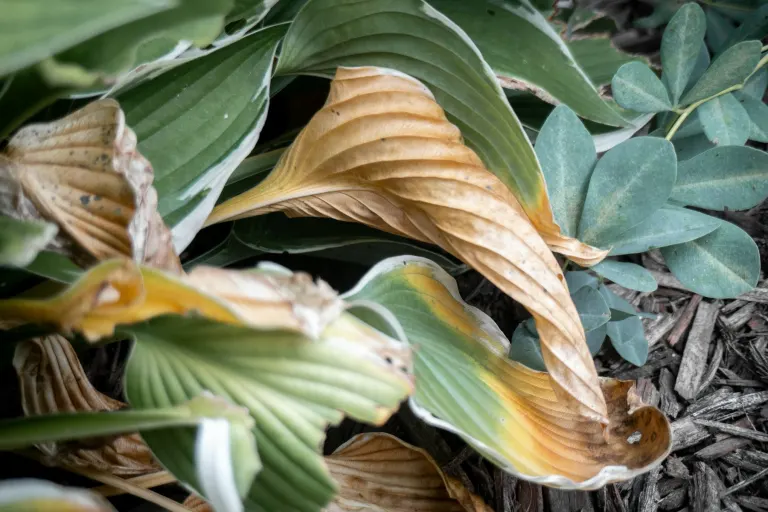
- Dry, crispy tips and edges: usually water, humidity or salt buildup — the subject of this guide.
- Soft, dark brown or black patches with yellow halos: often overwatering, root rot or a fungal or bacterial leaf spot. See overwatered vs underwatered plants.
- Bleached or brown patches on the sunny side: sunburn. See our light guide.
The 6 most common causes
1. Inconsistent watering or letting soil get too dry
When soil dries out completely, the farthest parts of the leaf — the tips — are the first to run short of water and die back. It often happens with plants that like steady moisture, such as peace lilies, ferns and calatheas.
Fix: Check the soil more often and water before it dries out completely for moisture-loving plants. See how often to water houseplants.
2. Low humidity
Dry indoor air, especially from winter heating, pulls moisture from leaves faster than roots can replace it. Thin-leaved tropical plants show it first.
Fix: Move plants away from radiators and vents, group them together, or use a small humidifier. Our humidity guide explains what really works (and why misting doesn’t do much).
3. Fertilizer and salt buildup
Fertilizer and hard tap water leave salts in the soil. Over time they build up and draw moisture out of the roots, which shows up as brown tips and edges. A white crust on the soil or pot rim is a clue.
Fix: Flush the soil every few months: water slowly and heavily in a sink or shower so several times the pot’s volume runs through, then let it drain fully. Fertilize only in spring and summer, at or below the label rate.
4. Sensitivity to tap water
Some plants react to chemicals such as fluoride and to high mineral levels found in some tap water. Dracaenas, spider plants, calatheas, prayer plants and peace lilies are well known for brown tips caused this way.
Fix: Try filtered water, collected rainwater or distilled water for these plants and see if new leaves grow in cleaner.
5. Too much direct sun or heat
Hot afternoon sun through glass can scorch leaf edges, especially on plants that prefer indirect light.
Fix: Move the plant back from the window or add a sheer curtain.
6. Root problems
Damaged roots can’t deliver enough water, so tips brown even when the soil is moist. This can come from root rot, being badly root-bound, or recent repotting.
Fix: Slide the plant out and look. Trim mushy roots and repot into fresh mix, or move a root-bound plant to a slightly larger pot.
Diagnosis cheat sheet
| Clue | Likely cause | First step |
|---|---|---|
| Soil often bone dry; leaves curl | Underwatering | Water more consistently |
| Worse in winter; plant near heater | Dry air | Move plant; add humidity |
| White crust on soil; you fertilize often | Salt buildup | Flush soil; feed less |
| Dracaena, spider plant or calathea with brown tips despite good care | Tap water sensitivity | Switch to filtered or rainwater |
| Browning on the window-facing side | Sun scorch | Move back from glass |
| Brown tips plus wet soil and yellowing | Root problems | Check roots |
How to trim brown leaf tips
- Use sharp, clean scissors. Wipe blades with rubbing alcohol between plants.
- Follow the natural leaf shape. Cut at an angle so the leaf keeps a pointed or rounded tip rather than a blunt square edge.
- Leave a thin line of brown. Cutting into healthy green tissue creates a fresh wound that may brown again.
- Remove leaves that are mostly brown at the base instead of trimming.
Judge progress by new leaves
Existing brown tips won’t heal. After you change your care, watch the next few new leaves. If they stay clean, you’ve found the cause.
What about curling leaves?
Curling often shows up alongside brown tips. It’s a plant’s way of reducing water loss. The usual triggers are thirst, dry air, heat or strong sun. Calathea leaves curl quickly when they need water. Check the soil first, then humidity and light.
Frequently asked questions
Will brown tips spread to the whole leaf?
Dry, crispy tips usually stay small if you fix the cause. Browning that spreads quickly, feels soft or has yellow halos is more likely rot or disease and needs a closer look.
Why does my spider plant have brown tips?
Spider plants are sensitive to salts and fluoride in tap water and to drying out. Flush the soil, water more consistently and try filtered or rainwater.
Should I leave the water out overnight before watering?
Leaving tap water out lets it reach room temperature, and some chlorine can escape. It won’t remove fluoride or dissolved minerals, though, so sensitive plants may still do better with filtered or rainwater.
Sources and further reading
- UC Statewide IPM Program — Houseplant Problems
- University of Missouri Extension — Caring for Houseplants