Pothos Care Guide: How to Grow a Lush, Trailing Pothos
Pothos is the ultimate starter plant: forgiving, fast-growing and easy to propagate. Here’s how to keep it full and vibrant — plus fixes for yellow leaves and leggy vines.
In this guide
Quick answer
Pothos grows best in medium to bright indirect light but tolerates lower light. Water when the top 1–2 inches of soil are dry — it will droop a little when thirsty and perk up after a drink. Use regular potting mix with some perlite, feed lightly in spring and summer, and trim long vines to keep it full.
Pothos at a glance
- Botanical name
- Epipremnum aureum
- Light
- Medium to bright indirect; tolerates low
- Water
- When the top 1–2 inches are dry
- Soil
- Potting mix with perlite
- Temperature
- Normal room temperatures; avoid cold drafts
- Humidity
- Average is fine
- Difficulty
- Very easy
- Pets
- Toxic to cats and dogs (ASPCA)
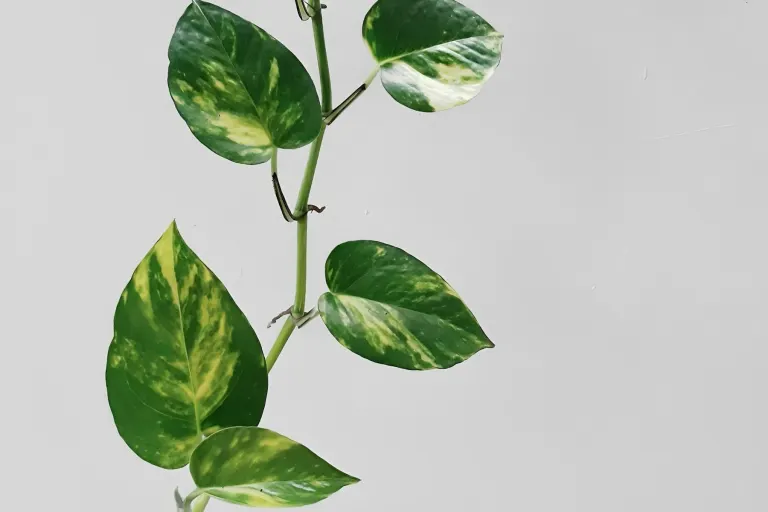
Pothos (sometimes called devil’s ivy) is a trailing vine with heart-shaped leaves. It grows quickly, looks great spilling from a shelf or hanging basket, and gives clear signals when something is wrong. If you’re new to houseplants, it’s one of the best places to start.
Popular pothos varieties
- Golden pothos: green leaves streaked with yellow. The toughest and most common.
- Marble Queen: heavily splashed with creamy white. Grows a bit slower and wants brighter light.
- Neon: bright chartreuse leaves.
- Pearls and Jade, N’Joy and Manjula: compact, patterned varieties with more white or silver.
You may also see “satin pothos” for sale. It’s a close relative (Scindapsus pictus) with similar care, but it’s a different plant.
Light
Pothos does best a few feet from a bright window where it gets plenty of indirect light. It will grow in lower light, but expect:
- Longer gaps between leaves (leggy vines).
- Smaller leaves.
- Less variegation — patterned varieties can turn mostly green.
Avoid long periods of hot direct sun, which can bleach or scorch leaves. Learn more in our light guide.
Watering
Water when the top 1–2 inches of soil are dry. In bright, warm conditions that might be once a week; in lower light or winter, every 10–14 days or so. Water thoroughly and let the excess drain away.
Pothos is good at telling you when it’s thirsty: leaves soften and droop slightly. Water within a day or two of seeing that and it will recover quickly. Don’t let it stay wilted for long, and don’t water on a fixed schedule — yellowing leaves are more often a sign of too much water. See how often to water houseplants.
Soil and pot
A standard indoor potting mix with a handful of perlite works well. Always use a pot with a drainage hole. Pothos doesn’t need a huge pot; move up one size when roots fill the container. See our potting mix guide.
Fertilizer
Feed every four to six weeks in spring and summer with a balanced liquid houseplant fertilizer at half strength. Skip feeding in winter.
How to make pothos fuller
A long pothos with bare stems near the pot is very common. Here’s how to get a bushier plant:
- Give it more light. Better light means shorter gaps between leaves.
- Trim long vines. Cut just above a leaf node (the bump where a leaf meets the stem). New growth often branches from below the cut.
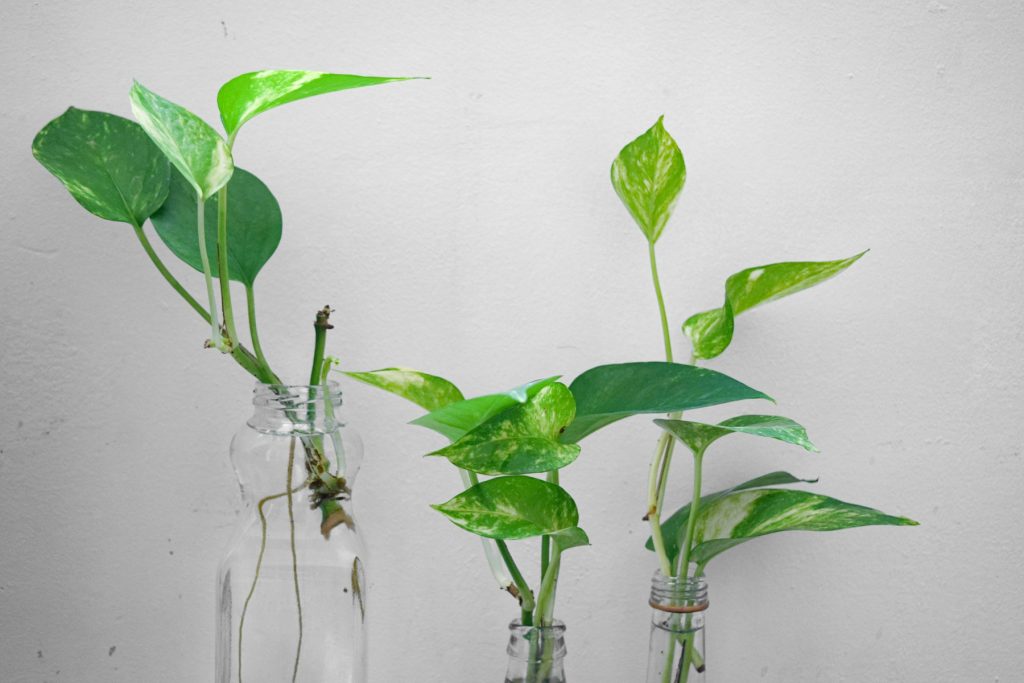
- Replant the cuttings. Root the trimmings in water or soil, then plant them back into the same pot to fill bare spots. Our pothos propagation guide shows you how.
- Let it climb. Pothos grown up a moss pole or trellis often produces larger leaves than one left trailing.
Common pothos problems
| Problem | Likely cause | What to do |
|---|---|---|
| Yellow leaves, soil damp | Overwatering | Let soil dry more; check drainage |
| Yellow leaves, soil dry; drooping | Underwatering | Water thoroughly; check more often |
| Brown, crispy spots or edges | Dry soil for too long, dry air or sunburn | Water consistently; move out of harsh sun |
| Long, bare vines | Low light; no pruning | Brighter spot; trim and replant cuttings |
| Losing variegation | Not enough light | Move closer to a window |
| Sticky leaves or white fluff | Mealybugs or scale | Isolate and treat — see our pests guide |
For a deeper dive, read why leaves turn yellow.
Is pothos safe for cats and dogs?
No. The ASPCA lists pothos as toxic to cats and dogs. It contains insoluble calcium oxalate crystals that can irritate the mouth and cause drooling, vomiting and difficulty swallowing if chewed. Hang it well out of reach, or choose from our pet-safe plants.
Frequently asked questions
Can pothos grow in just water?
Yes, pothos can live in water for a long time. Use a clean container, refresh the water every week or two, and add a very diluted liquid fertilizer occasionally. Plants in soil usually grow bigger and fuller.
How fast does pothos grow?
In good light and warm weather, vines can grow several inches or more a month. Growth slows a lot in low light and winter.
Why are my pothos leaves getting smaller?
Usually not enough light, a lack of nutrients or a very root-bound plant. Move it somewhere brighter, feed during the growing season and repot if roots are circling.
Sources and further reading
- ASPCA — Toxic and Non-Toxic Plants
- University of Missouri Extension — Caring for Houseplants