How Much Light Do Indoor Plants Need? Low, Medium and Bright Light Explained
“Bright indirect light” confuses everyone. Learn what low, medium and bright light really look like in your home, how to measure it, and the signs a plant needs more (or less).
In this guide
Quick answer
Most popular houseplants grow best in bright, indirect light — a spot near a window where the plant can see a lot of sky but isn’t hit by strong midday sun for hours. A few tough plants (like snake plants, ZZ plants and pothos) tolerate low light, but they grow slowly there. No houseplant can live in a room with no natural or artificial light.
After watering, light is the biggest reason houseplants thrive or struggle. The tricky part is that our eyes adjust so well to indoor light that a room can look bright to us while being quite dim for a plant. A spot a few steps back from a window can get a small fraction of the light found right beside the glass.
This guide explains the plant-tag terms in plain English and shows you how to find the right spot for every plant.
What the light labels on plant tags mean
| Label | What it looks like | Typical spot | Plants that fit |
|---|---|---|---|
| Low light | You can read comfortably in the day, but shadows are faint or missing | Across the room from a window; north-facing rooms; hallways with some daylight | ZZ plant, snake plant, pothos, cast iron plant |
| Medium light | Soft shadows; the plant sees a good patch of sky | A few feet from an east or west window, or beside a north window | Philodendron, peace lily, calathea, parlor palm |
| Bright indirect light | Bright all day, with clear shadows, but little or no direct sun on the leaves | Right beside an east window, or a few feet back from a south or west window | Monstera, rubber plant, fiddle leaf fig, hoya |
| Direct sun | Sun rays hit the plant for several hours; sharp shadows | On or right next to a south or west windowsill | Cacti, many succulents, aloe, citrus |
Window directions above apply to the Northern Hemisphere. In the Southern Hemisphere, swap north and south.
How to measure light at home
The shadow test
Around midday, hold your hand about a foot above the spot where you want to put a plant.
- Crisp, dark shadow: bright or direct light.
- Soft shadow with fuzzy edges: medium to bright indirect light.
- Faint shadow or none: low light.
Use a light meter app
Free light meter apps use your phone’s camera to estimate brightness in lux or foot-candles. They aren’t lab-accurate, but they’re great for comparing spots. As a rough guide, many growers treat readings in the low hundreds of foot-candles as low light, several hundred to about a thousand as medium, and around a thousand or more as bright light.
Our Light Calculator can also help you estimate the light at a spot and suggest plants that suit it.
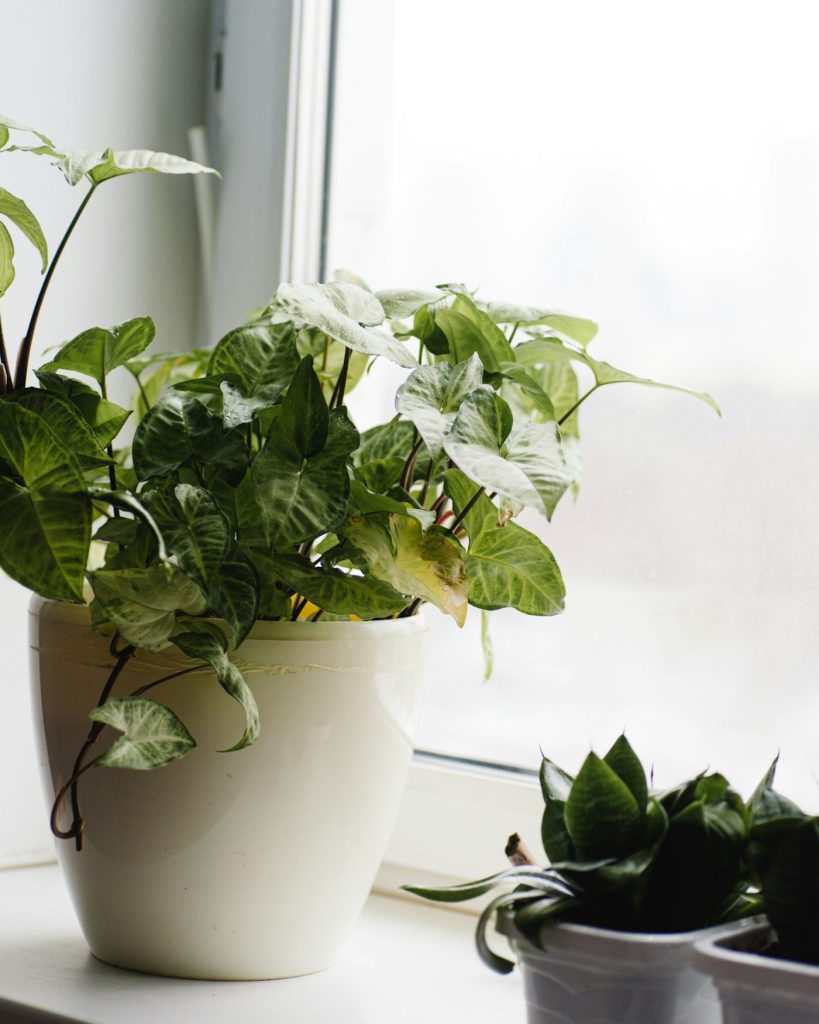
How window direction changes things
- North-facing: steady, gentle light all day. Good for low- and medium-light plants.
- East-facing: bright morning sun that’s mild enough for most houseplants. Often the easiest window.
- West-facing: strong, hot afternoon sun. Great for sun lovers; move delicate plants back a few feet or add a sheer curtain.
- South-facing: the most light, especially in winter. Ideal for cacti and succulents; filter it for thin-leaved tropicals.
Obstacles matter too. A tree outside, a deep window frame or a covered porch can cut the light a lot.
Signs your plant needs more light
- Leggy, stretched stems with long gaps between leaves.
- Leaning hard toward the window.
- Small new leaves that are paler than older ones.
- Variegation fading — patterned leaves turning mostly green.
- Soil staying wet for a long time, which can lead to root rot.
- No new growth during spring and summer.
- Lower leaves yellowing and dropping over time.
Move the plant closer to a window in small steps. Going from a dark corner straight into hot afternoon sun can scorch leaves.
Signs your plant is getting too much light
- Pale, washed-out or bleached patches on leaves.
- Crispy brown or white spots on the side facing the window.
- Leaves curling or folding inward during the hottest part of the day.
- Soil drying out extremely fast.
Careful when moving plants outside
Even sun-loving houseplants can burn if you move them from indoors straight into outdoor sun. Start in full shade and increase sun exposure gradually over one to two weeks.
What if you don’t have much natural light?
You still have good options:
- Choose tough plants. Our list of low-light indoor plants covers the most forgiving choices.
- Use the brightest spot you have. Even a north window beats the middle of a room.
- Keep windows and leaves clean. Dust blocks light. Wipe leaves gently with a damp cloth.
- Add a grow light. A full-spectrum LED grow light on a timer for 10–14 hours a day can support plants in almost any room.
- Water less. Plants in lower light use less water, so let the soil dry a bit more between waterings. See how often to water houseplants.
Rotate your plants
Plants grow toward light. Turn pots a quarter turn every week or two so all sides get light and the plant grows evenly instead of leaning.
Frequently asked questions
Can a plant survive with only artificial light?
Yes, with the right light. Regular household bulbs are usually too weak on their own, but LED grow lights placed close to the plant (often 6–24 inches away, depending on the light) can grow many houseplants well. Keep a consistent schedule with a timer.
Is a bathroom with a small window too dark for plants?
Not always. Frosted bathroom windows often provide medium light. Test with a light meter app, and see our guide to bathroom plants for options that like the humidity.
Does a sheer curtain count as indirect light?
Yes. A sheer curtain softens direct sun into bright, filtered light, which suits most tropical houseplants.
Sources and further reading
- University of Minnesota Extension — Lighting for indoor plants and starting seeds
- University of Missouri Extension — Caring for Houseplants