Peace Lily Care: How to Keep It Healthy and Blooming
Peace lilies are dramatic — they flop when thirsty and bounce right back. Learn how to water, where to place them for flowers, and how to fix brown tips and yellow leaves.
In this guide
Quick answer
Keep your peace lily in medium to bright indirect light and water when the top inch of soil is dry — it likes soil that stays lightly moist but not soggy. It will droop dramatically when thirsty and recover within hours of watering. For more flowers, give it brighter indirect light. Brown tips usually mean dry soil, dry air or sensitivity to tap water.
Peace lily at a glance
- Botanical name
- Spathiphyllum species and hybrids
- Light
- Medium to bright indirect; tolerates low (fewer flowers)
- Water
- When the top inch is dry; don’t let it dry out fully
- Soil
- Standard potting mix with some perlite
- Temperature
- Warm room temperatures; keep away from cold drafts
- Humidity
- Average to higher
- Difficulty
- Easy
- Pets
- Toxic to cats and dogs (ASPCA)
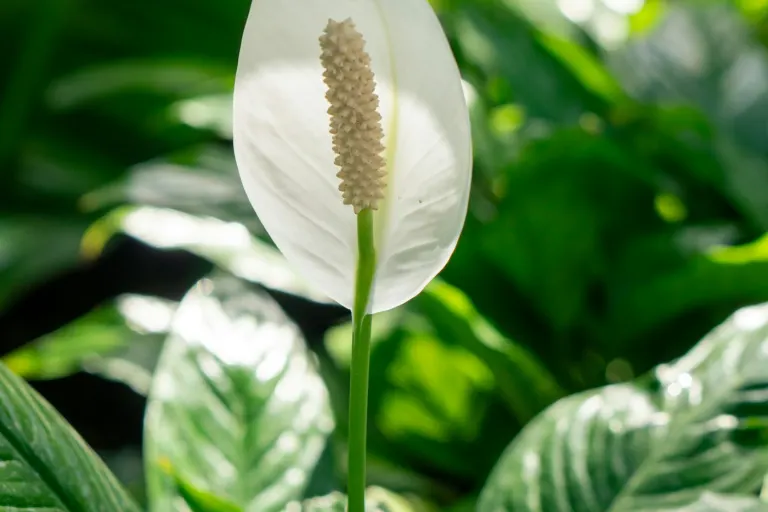
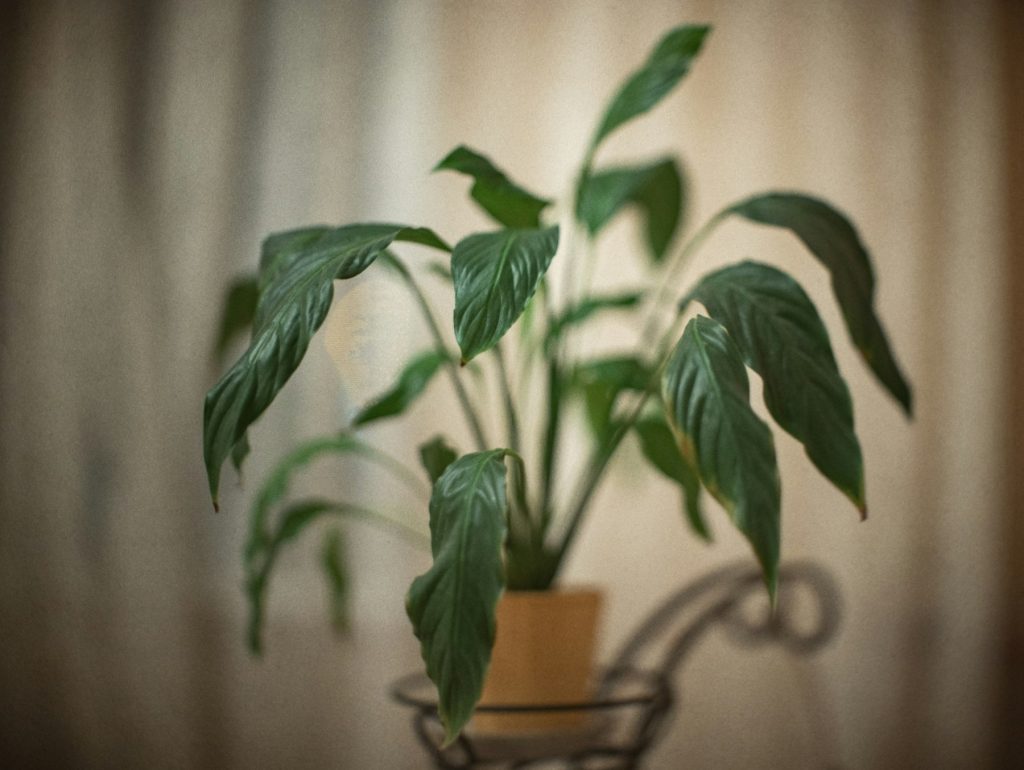
Peace lilies have glossy dark leaves and elegant white “flowers” that are actually a modified leaf called a spathe wrapped around a spike of tiny true flowers. They’re great for beginners because they’re so expressive: a thirsty peace lily flops over, which makes it hard to forget to water.
Light
Peace lilies are often sold as low-light plants, and they do tolerate shade. But in dim spots they rarely bloom. For flowers and healthy growth, place yours in medium to bright indirect light — near a north or east window, or a few feet back from a brighter window.
Avoid direct afternoon sun, which can cause pale, scorched patches. See our light guide.
Watering
Peace lilies like steady moisture. Water when the top inch of soil feels dry, soaking thoroughly and letting the excess drain.
- Don’t wait for the droop every time. An occasional droop is fine, but repeated wilting stresses the plant and leads to yellow leaves and brown tips.
- Don’t keep it soggy either. Wet soil for days can cause root rot — and a peace lily with rotting roots droops even when the soil is wet.
If it droops, feel the soil first. Dry? Water it. Wet? Read overwatered vs underwatered plants.
Tap water and brown tips
Peace lilies can be sensitive to salts and some chemicals in tap water, which shows up as brown leaf tips. If that happens despite good watering, try filtered or rainwater and flush the soil every few months. More in our brown leaf tips guide.
How to get a peace lily to bloom
- Increase light. This is the most common fix. Bright, indirect light encourages blooms.
- Be patient with young plants. Very small plants may not bloom until they mature.
- Feed lightly in spring and summer with a balanced houseplant fertilizer at half strength.
- Don’t over-pot. Peace lilies often bloom better when slightly snug in their pot.
- Remove spent flowers. Cut faded flower stalks at the base.
It’s normal for white spathes to turn green or brown as they age. Many greenhouse-grown plants are encouraged to bloom before sale, so a new plant may take a while to flower again at home.
Soil, pot and repotting
Use a standard indoor potting mix with some perlite for drainage, in a pot with a drainage hole. Repot every one to two years in spring, or when roots crowd the pot and the plant needs water very often. You can also divide a large peace lily into smaller clumps when repotting. See our repotting guide.
Temperature and humidity
Keep peace lilies in normal, warm room temperatures, away from cold drafts, air conditioning vents and chilly windows. They appreciate moderate to higher humidity — a bathroom or kitchen with a window can suit them well. See our humidity guide and our picks of bathroom plants.
Common peace lily problems
| Problem | Likely cause | What to do |
|---|---|---|
| Dramatic drooping, dry soil | Thirst | Water thoroughly; check more often |
| Drooping, wet soil | Overwatering / root rot | Let soil dry slightly; check roots |
| Brown leaf tips | Dry soil, low humidity, tap water or fertilizer salts | Water consistently; flush soil; try filtered water |
| Yellow leaves | Overwatering, repeated wilting, or natural aging | Adjust watering; remove old leaves — see yellow leaves |
| No flowers | Not enough light; young plant | Brighter indirect light; light feeding |
| Pale, scorched patches | Direct sun | Move out of direct afternoon sun |
Are peace lilies toxic to pets?
Yes. The ASPCA lists peace lilies as toxic to cats and dogs. They contain insoluble calcium oxalate crystals that can cause mouth pain, drooling, vomiting and trouble swallowing if chewed. Despite the name, peace lilies aren’t true lilies (Lilium), which are far more dangerous to cats — but they still aren’t pet-safe. Browse our pet-safe indoor plants for alternatives.
Frequently asked questions
How often should I water a peace lily?
There’s no fixed schedule. Many peace lilies need water about once a week in spring and summer and less often in winter, but always check that the top inch of soil is dry first.
Should I cut off brown peace lily flowers?
Yes. Once a flower turns green or brown, cut the whole stalk off near the base. It keeps the plant tidy and can encourage new growth.
Can a peace lily live in a room with no windows?
Only with a grow light or strong, consistent artificial light for many hours a day. Without enough light it will slowly decline and won’t bloom.
Sources and further reading
- ASPCA — Toxic and Non-Toxic Plants
- University of Missouri Extension — Caring for Houseplants