Houseplant Propagation for Beginners: 5 Easy Methods
Grow new plants for free. This beginner’s guide explains stem cuttings, leaf cuttings, division, offsets and air layering — and which method works best for popular houseplants.
In this guide
Quick answer
The five main ways to propagate houseplants are stem cuttings (pothos, philodendron, monstera), leaf cuttings (succulents, snake plant), division (peace lily, snake plant, ZZ plant), offsets or plantlets (spider plant, aloe) and air layering (rubber plant, large monstera). Stem cuttings in water are the easiest place to start.
Propagation simply means making new plants from an existing one. It’s free, it’s fun, and it’s a great way to fill out a leggy plant, save a struggling one or share with friends. Different plants grow in different ways, so the trick is choosing the method that matches your plant.
Which method works for which plant?
| Method | Great for | Difficulty | Time to root |
|---|---|---|---|
| Stem cuttings | Pothos, philodendron, monstera, tradescantia, hoya, rubber plant | Easy | 2–6 weeks |
| Leaf cuttings | Succulents (echeveria, jade), snake plant, some peperomia | Easy but slow | Weeks to months |
| Division | Peace lily, snake plant, ZZ plant, calathea, ferns | Easy | Instant (already rooted) |
| Offsets & plantlets | Spider plant, aloe, many succulents | Very easy | 1–3 weeks |
| Air layering | Rubber plant, fiddle leaf fig, large monstera | Moderate | 4–8+ weeks |
Before you start: 5 tips for success
- Propagate in spring or summer, when plants grow actively.
- Use clean, sharp tools to avoid crushing stems or spreading disease.
- Take cuttings from healthy plants with no pests.
- Give cuttings bright, indirect light — never hot direct sun.
- Be patient. Resist pulling cuttings up to check every day.
1. Stem cuttings
Most vining and many upright tropical plants grow new roots from nodes — the points on a stem where leaves attach. A stem cutting needs at least one node.
- Cut a 4–6 inch stem section just below a node.
- Remove leaves from the lower part so the node is exposed.
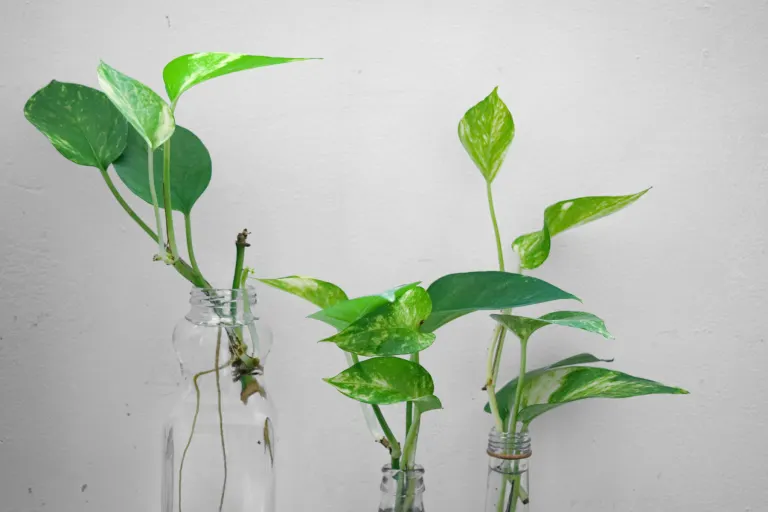
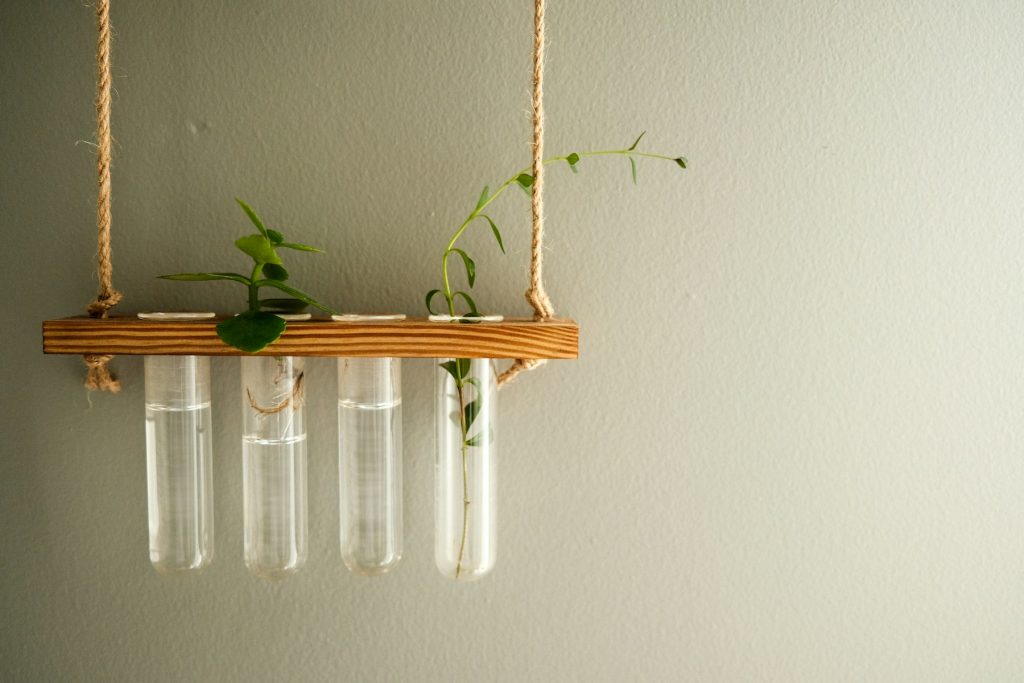
- Root it in water (change the water weekly) or directly in moist potting mix.
- Keep it warm and in bright, indirect light.
- Pot up water cuttings once roots are 1–3 inches long.
For a detailed walk-through, see how to propagate pothos. Monstera works the same way but needs a thicker stem piece with a node — ideally with an aerial root. See monstera care.
2. Leaf cuttings
Some plants can grow a whole new plant from a leaf or a piece of leaf.
Succulent leaves
- Gently twist off a plump, healthy leaf so it comes away cleanly.
- Let it dry for a few days until the end calluses over.
- Lay it on top of dry, gritty succulent mix in bright, indirect light.
- Mist the soil surface lightly once roots appear, then water sparingly as a tiny plant forms.
Snake plant leaf sections
Cut a leaf into sections a few inches long, keeping track of which end was pointing down. Let them dry for a day or two, then stand them upright in moist, gritty mix or water. Rooting can take a couple of months. Varieties with yellow edges usually lose that edge when grown from leaf cuttings — use division to keep it. See our snake plant care guide.
3. Division
Plants that grow in clumps from the base can be split into smaller plants, each with its own roots. It’s the quickest method because you get a rooted plant straight away.
- Water the plant the day before.
- Slide it out of the pot and shake or rinse off loose soil.
- Find natural separation points between clumps or stems.
- Gently pull them apart, or cut through thick roots with a clean knife. Each section should have healthy roots and leaves.
- Pot each division in fresh mix and water well. Keep out of harsh sun for a week.
Division fits naturally with repotting.
4. Offsets and plantlets
Some plants do the work for you by producing baby plants.
- Spider plants send out long stems with little “spiderettes”. Pin a baby onto a small pot of moist soil while it’s still attached, then snip the runner once it roots — or root the baby in water.
- Aloe and many succulents produce pups around the base. When a pup is a few inches tall, separate it with some roots attached, let it dry for a day, then pot it in gritty mix.
5. Air layering
Air layering lets a stem grow roots while it’s still attached to the parent plant. It’s ideal for tall, woody plants like rubber plants that have become leggy.
- Choose a point on the stem, just below a node, where you’d like the new plant to start.
- Make a small, shallow upward cut or remove a thin ring of outer bark (research your specific plant first).
- Wrap the wound in damp sphagnum moss and cover it with plastic wrap, securing both ends.
- Keep the moss damp. When you see plenty of roots through the plastic, cut the stem below the new roots and pot it.
Watch out for sap
Plants like rubber plants and fiddle leaf figs have milky sap that can irritate skin and is toxic to pets. Wear gloves and keep cuttings away from animals.
Water or soil?
Water lets you watch roots form and is great for stem cuttings. Soil avoids a transplant step and suits succulents, leaf cuttings and divisions. Both work — pick what’s easiest for you. Our free Plant Care Tracker can help you log when you took cuttings.
Why propagation fails (and fixes)
- No node on the cutting: recut to include one.
- Rotting stems: change water more often, use clean jars, and trim above the rot.
- Too cold or dark: move cuttings somewhere warm with bright, indirect light.
- Soil too wet: keep propagation mix lightly moist, never soggy.
- Too much handling: pulling cuttings out repeatedly damages new roots.
Frequently asked questions
What’s the easiest houseplant to propagate?
Pothos, spider plants and tradescantia are among the easiest. Pothos stem cuttings root readily in a glass of water.
Is it legal to propagate any plant I buy?
For personal use, propagating common houseplants is generally fine. Some newer varieties are protected by plant patents or trademarks, which restrict propagating them for sale. Check the plant tag if you plan to sell plants.
Should cuttings go in direct sun?
No. Cuttings have few or no roots, so strong sun can dry and scorch them. Bright, indirect light is best.