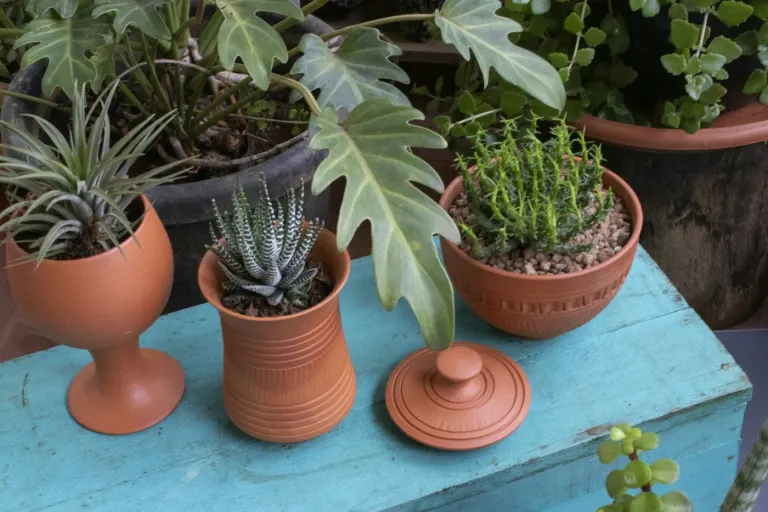
Indoor Plant Pots
Best for: Any room
- Match plant size and style
- Many drainage options
- Drainage holes vary — check before buying
Buying guide
Terracotta, ceramic, plastic or self-watering? How to choose a pot that keeps roots healthy — the right size, material and drainage for each kind of houseplant.
Updated
Quick answer
Choose a pot with a drainage hole, only 1–2 inches wider than the current root ball. Use terracotta for plants that like to dry out (succulents, snake plants) and plastic or glazed ceramic for plants that like steady moisture (ferns, calatheas). A decorative pot without a hole is fine as an outer cachepot.
The right pot makes watering easier and protects roots from rot. The wrong one — too big, no drainage, or the wrong material for the plant — is behind a lot of struggling houseplants.
| Material | Pros | Cons | Best for |
|---|---|---|---|
| Terracotta (unglazed clay) | Breathable; soil dries faster; heavy and stable | Dries out quickly; can crack; mineral staining | Succulents, cacti, snake plant, overwaterers |
| Glazed ceramic | Holds moisture; decorative; stable | Heavy; often lacks drainage holes | Most tropical plants (with a drainage hole) |
| Plastic nursery pots | Light, cheap, holds moisture, easy to repot from | Less stable for tall plants | Inside cachepots; moisture lovers |
| Self-watering pots | Reservoir helps busy owners and travellers | Easy to keep soil too wet for some plants | Pothos, peace lily, ferns — not succulents |
| Fabric / grow bags | Excellent airflow and drainage | Dry out fast; less decorative indoors | Vigorous growers, aroids |
See our step-by-step repotting guide for when and how to move up a size.
Love a decorative pot with no drainage hole? Keep your plant in its plastic nursery pot and set it inside. Lift it out to water in the sink, let it drain, then put it back. You get the look without soggy roots — and repotting is easier later.
Skip the gravel layer
Adding rocks to the bottom of a pot without a hole doesn’t create drainage — water still collects around the roots. A real drainage hole is the fix. More in potting mix basics.
Often, yes, using a diamond or tile drill bit, slow speed, water to keep it cool and eye protection. Some glazed pots crack, so it’s a risk with expensive ones.
They can be for moisture-loving plants if you let the reservoir run dry occasionally. For succulents and snake plants, a regular terracotta pot is safer.
Shopping shortcuts
Links go to Amazon search results so you can compare current prices, sizes and reviews yourself. We don’t list prices or star ratings here because they change constantly.
Best for: Any room
| Product | Best for | Budget | Link |
|---|---|---|---|
| Self-Watering Pot | Busy owners | Mid | View |
| Plant Grow Light | Low-light apartments | Mid | View |
| Moisture Meter For Plants | Beginners | Budget | View |
| Plant Stand Indoor | Floor plants | Mid | View |
| Watering Can Indoor Plants | Daily use | Budget | View |
| Plant Humidifier | Tropicals & calatheas | Mid | View |
Before you buy