Monstera Deliciosa Care: Light, Water, Support and Common Problems
Want those famous split leaves? Monstera needs the right light, a chunky mix and something to climb. Here’s a practical care guide, plus fixes for yellow leaves and no fenestrations.
In this guide
Quick answer
Monstera deliciosa thrives in bright, indirect light, with watering when the top 2 inches of soil are dry. Plant it in a chunky, well-draining mix (potting mix with bark and perlite), give it a moss pole or stake to climb as it grows, and feed monthly in spring and summer. Splits in the leaves (fenestrations) appear as the plant matures in good light.
Monstera at a glance
- Botanical name
- Monstera deliciosa
- Light
- Bright indirect; gentle morning sun is fine
- Water
- When the top 2 inches are dry
- Soil
- Chunky aroid mix (bark + perlite)
- Temperature
- Warm room temperatures; avoid below about 55°F (13°C)
- Humidity
- Average is OK; higher humidity helps leaves
- Difficulty
- Easy
- Pets
- Toxic to cats and dogs (ASPCA)
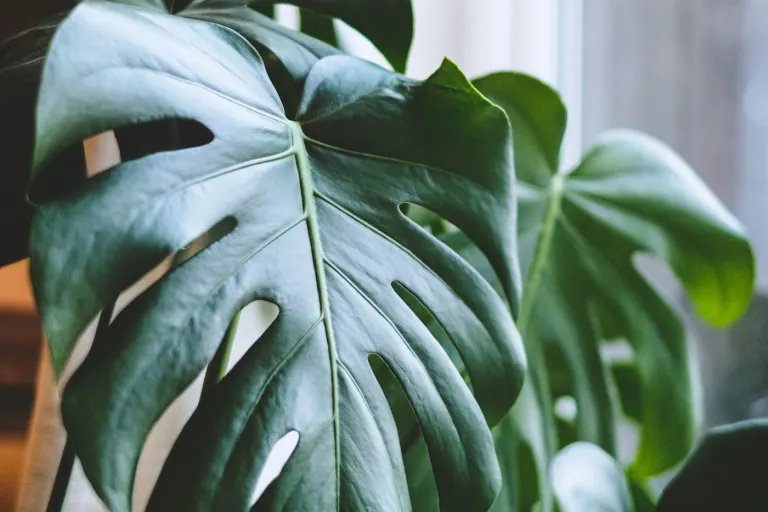
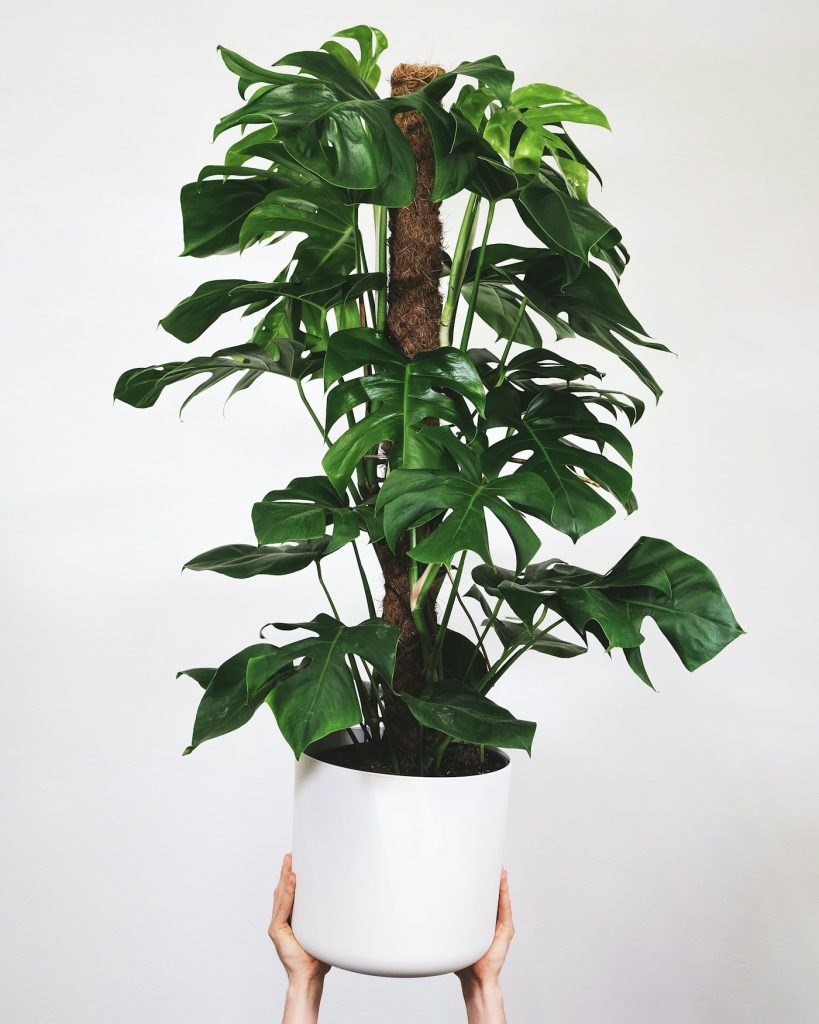
Monstera deliciosa is the dramatic plant with big, glossy, split leaves. It’s surprisingly easy to grow — the main things it asks for are good light, room to grow and a little patience. In its natural habitat it’s a climbing plant, which explains a lot about how it behaves indoors.
Light
Bright, indirect light is the single most important factor for a healthy monstera with large, split leaves. Place it near an east window, or several feet from a south or west window. A little gentle morning sun is fine; hours of hot afternoon sun through glass can scorch leaves.
In lower light, monstera will survive but usually grows leggy with small, solid leaves. Read how much light indoor plants need for help finding the right spot.
Why aren’t my monstera leaves splitting?
Young monsteras naturally have solid, heart-shaped leaves. Splits and holes develop as the plant matures. You can help it along with:
- More light — the most common reason for solid leaves on an older plant.
- Support to climb — climbing monsteras tend to produce larger, more mature leaves.
- Consistent care — steady watering and feeding in the growing season.
- Time — a small cutting may take a year or more to produce split leaves.
Watering
Water when the top 2 inches of soil feel dry. Water slowly until it drains out of the bottom, then empty the saucer. In bright light during summer, that might be weekly; in winter it could be every two weeks or longer.
Monstera handles a little dryness better than soggy soil. If you see yellowing lower leaves and damp soil, cut back. See how often to water houseplants.
Soil and pot
Monstera roots like air. Use a chunky aroid mix — for example, 2 parts potting mix, 1 part orchid bark and 1 part perlite — in a pot with a drainage hole. Repot every one to two years in spring, moving up 2 inches or so. Our potting mix guide has more recipes, and our repotting guide shows the steps.
Support: moss poles and aerial roots
As monstera grows, it sends out thick aerial roots and starts to lean or sprawl. Giving it something to climb keeps it upright and encourages bigger leaves.
- Insert a moss pole, coir pole or sturdy stake when you repot, so you don’t damage roots later.
- Tie stems loosely to the pole with soft plant ties.
- Guide aerial roots toward the pole or tuck them into the soil. You can trim ones that get in the way — it won’t harm the plant.
Temperature and humidity
Monstera enjoys normal room temperatures and doesn’t like cold drafts or chilly windows in winter. Average home humidity is usually fine, but very dry air can lead to brown, crispy edges and new leaves that struggle to unfurl. Grouping plants or using a humidifier helps — see our humidity guide.
Fertilizer
Feed monthly in spring and summer with a balanced liquid houseplant fertilizer at the label rate or slightly weaker. Don’t feed in winter or right after repotting.
Pruning and size
Indoors, monstera can grow several feet tall and wide. To control size, cut stems back just above a node in spring or summer. Keep the cuttings — each piece with a node and ideally an aerial root can become a new plant.
Common monstera problems
| Problem | Likely cause | What to do |
|---|---|---|
| Yellow lower leaves, damp soil | Overwatering | Let soil dry more; check roots |
| Brown, crispy edges | Dry soil, dry air or too much sun | Water consistently; raise humidity; filter sun |
| Dark brown patches with yellow halo | Overwatering or leaf spot | Water less; remove affected leaves; improve airflow |
| Drooping | Thirst or root problems | Check soil moisture before watering |
| Small leaves, no splits, leggy stems | Not enough light | Move to brighter indirect light; add a pole |
| Water droplets on leaf edges | Guttation (normal after watering) | No action needed; water a bit less if frequent |
| Silvery streaks or fine webbing | Thrips or spider mites | Isolate and treat — see our pests guide |
Is monstera toxic to pets?
Yes. The ASPCA lists monstera (sometimes called split-leaf philodendron) as toxic to cats and dogs because it contains insoluble calcium oxalate crystals. Chewing can cause mouth irritation, drooling and vomiting. Keep it out of reach or choose a pet-safe plant.
Frequently asked questions
How do I propagate a monstera?
Cut a stem section that includes at least one node (ideally with an aerial root) and a leaf. Root it in water or moist, chunky mix in bright indirect light. A leaf without a node won’t grow a new plant. See houseplant propagation for beginners.
Is Monstera adansonii the same as Monstera deliciosa?
No. Monstera adansonii is a smaller, vining species with oval leaves full of holes. Its care is similar, but it stays much smaller and often likes a bit more humidity.
Should I clean monstera leaves?
Yes. Wipe the big leaves with a soft damp cloth every few weeks. Dust blocks light and makes pests harder to spot. Skip leaf-shine products.
Sources and further reading
- ASPCA — Toxic and Non-Toxic Plants
- University of Minnesota Extension — Lighting for indoor plants